PREMIER HVAC/R TRAINING IN ST. LOUIS
Searching for reputable schools to launch your career in Heating, Ventilation and Air Conditioning? Look no further than American Trade School! With a legacy of excellence and a commitment to preparing skilled professionals, our HVAC training program is designed to empower you for success in today's competitive job market.
HEATING & AIR CONDITIONING PROGRAM OVERVIEW
If you're looking for a career where you can work with your hands, while solving problems with your mind, consider becoming an HVAC/R technician.
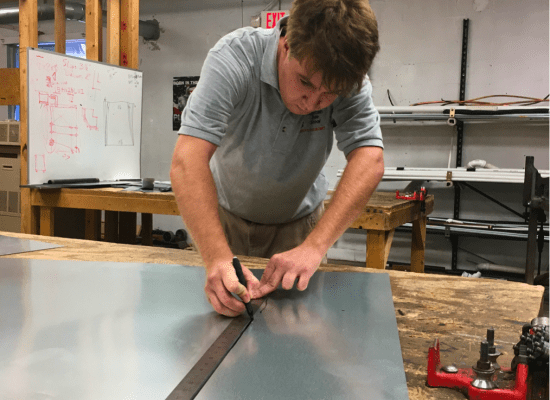
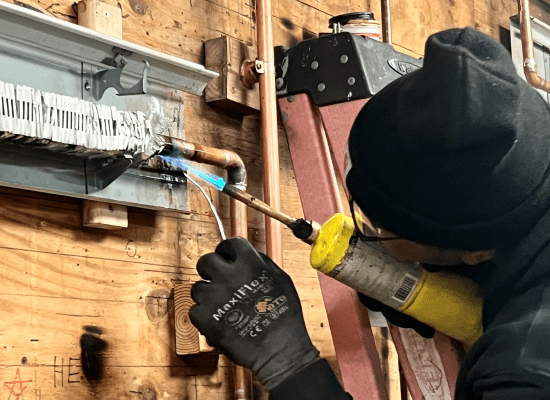
Our HVAC training program gives students the technical knowledge and hands-on experience needed to begin a rewarding career in Heating, Ventilation, Air Conditioning, and Refrigeration. Specifically, you'll receive practical training in installation, maintenance, and service, all under the close supervision of experienced instructors who are dedicated to your success.
At American Trade School, our students are mechanical thinkers who enjoy learning new concepts and immediately applying them in the shop. Whether you’re starting fresh or changing careers, our HVAC classes prepare you to enter the workforce with confidence and real-world skills.
Our graduates are in demand by residential, commercial and refrigeration employers.
HVAC APPRENTICESHIP
Our Heating, Ventilation, and Air Conditioning Installer/Servicer program is recognized by the Air Conditioning Contractors of America, St. Louis as well as the U.S. Department of Labor, Office of Apprenticeship. Because of this, our graduates receive related instruction hours towards three registered apprenticeship paths: HVAC Installer/Servicer, Sheet Metal Workers, and Pipefitters.
HVAC CURRICULUM
Refrigeration & Electricity
Air Conditioning
Residential Installation
Boilers and Piping
Heating
HVAC/R PROGRAM CURRICULUM
The HVAC/R program offers a hybrid learning format, combining classroom and online instruction. The 8-month program consists of two courses: Fundamentals and Advanced - each is 16 weeks in length. The program is approved by the US Department of Labor and prepares students to pass the EPA 608 refrigerant certification through ESCO.
HEATING & AIR CONDITIONING INSTALLER/SERVICER (8 MONTH PROGRAM)
HVAC101 - Intro to Refrigeration & Electricity Systems
FUNDAMENTALS COURSE: 16 Weeks
The OSHA 10 and the EPA Section 608 certification tests are administered during this course.
Introduction to Refrigeration:
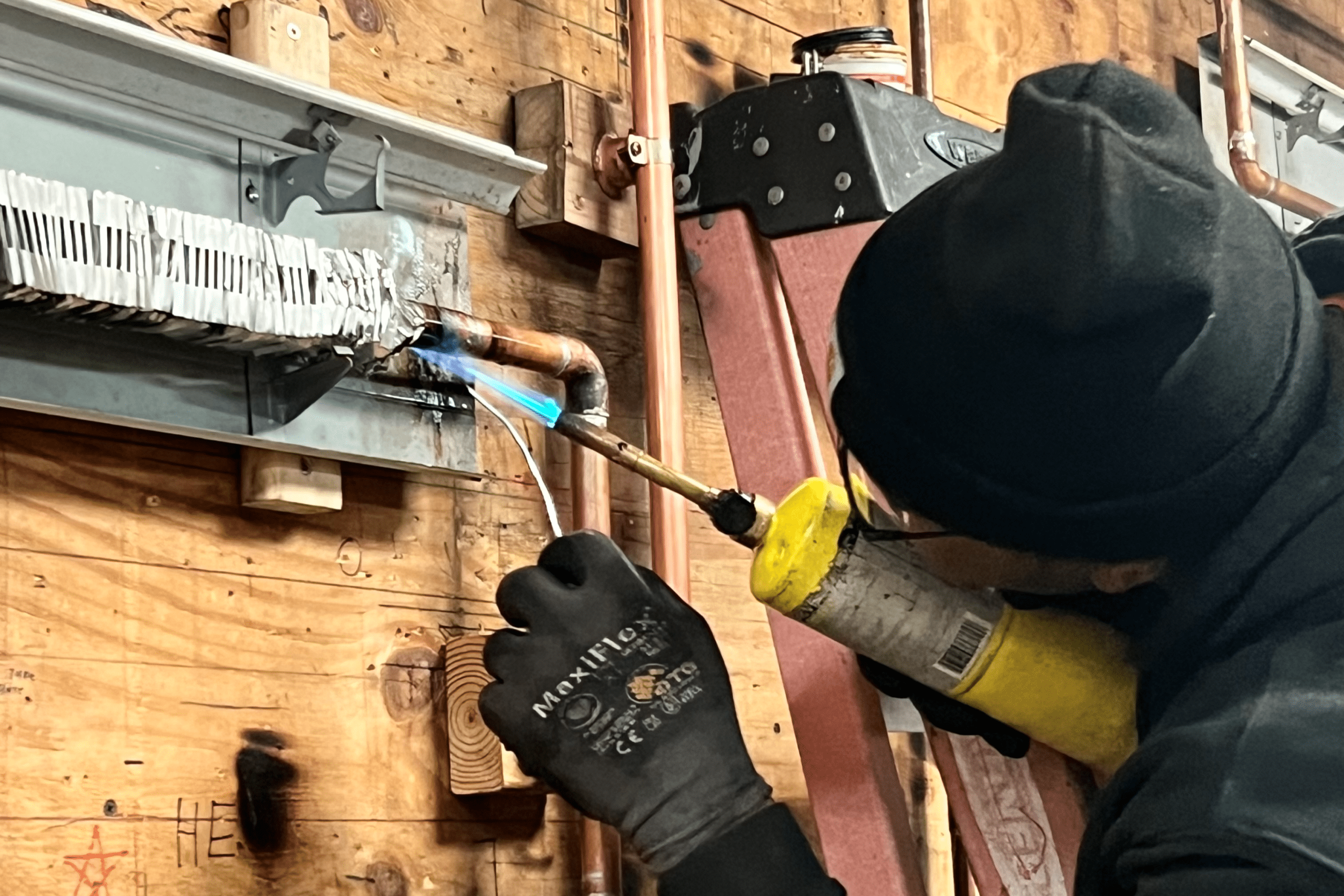
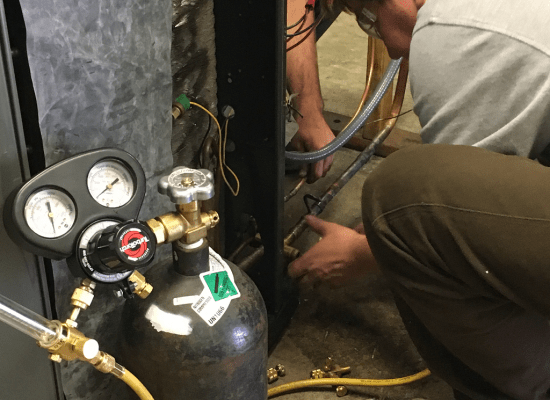
This term thoroughly covers the refrigeration cycle and its components, which form the backbone of all air conditioning and refrigeration systems. Students dive into the theory and hands-on lab projects of refrigeration including safety, hand tools, recovery, flaring, swaging, and brazing. Also, they learn the theory behind temperature, matter and energy, the refrigeration cycle, refrigerants, evacuations, and charging systems.
Electricity:
Electricity is found in every unit with which the HVAC/R servicer/installer will come in contact and is a fundamental concept that must be understood thoroughly, even for entry-level positions. The focus is on safety, hand-tools, energy sources, meter use, circuits, Ohm’s law, magnetic theory, transformers, single and three-phase electricity, wiring diagrams and troubleshooting.
HVAC102 - Air Conditioning & Heating
ADVANCED COURSE: 16 Weeks
Prerequisite: HVAC101
Air Conditioning:
Providing a comfortable environment in hot weather is the job of the HVAC technician. During this advanced term, the focus is on indoor air comfort, and the refrigeration cycle. Also taught is, installation, controls, typical operating condition, maintenance of air conditioning systems, and air-to-air heat-pumps. The sequence of operation is stressed and how to troubleshoot the system.
Heating:
This advanced term provides the theory and hands-on lab projects to understand the sequence of operation between different types of heating units (gas, low to high efficiency furnaces and electric heating systems). Students will learn ignition systems, natural & induced draft furnaces, condensing furnaces, and preventive maintenance. There will be troubleshooting the electrical, air & mechanical side, and the diagnosis/repair of each system.
HVAC/R Advanced Elective Courses:
HVAC103 - Residential Installation
ADVANCED ELECTIVE COURSE: 8 Weeks
Prerequisite: HVAC101 & HVAC102
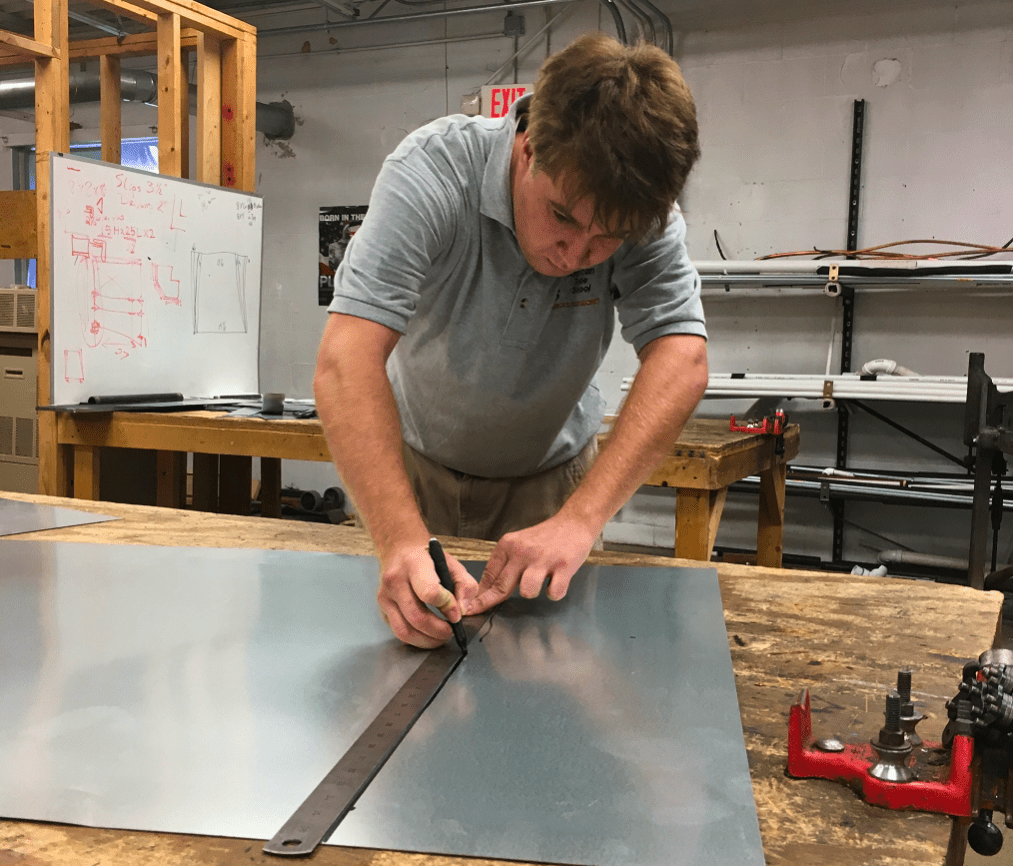
Many contractors specialize in the installation of heating and air conditioning units. This course provides theory and hands-on lab projects to give students the fundamental skills necessary to be an HVAC installer. The focus is on flue pipe and gas line sizing, sheet metal fabrication, installation, and start-up procedures of HVAC equipment, as well as the operation and installation of indoor air quality products.
HVAC104 - Boilers and Piping
ADVANCED ELECTIVE COURSE: 8 Weeks
Prerequisite: HVAC101 & HVAC102
Boiler systems are a prominent heat source in almost every region in the United States. Technicians install and maintain residential and light commercial hydronic systems. This course provides the theory and hands-on projects necessary to expose the student to common practices in the area of boilers and piping. The focus is on the boiler’s main components, circulation pumps, system design, terminal units, pipe sizing, sizing fittings, system friction, sizing the circulator pump, accessories, controls, preventive maintenance, and troubleshooting.
The advanced elective courses are optional and can be taken immediately after completing the 8-month program or at a future date.
HVAC/R APPRENTICESHIP (8 Month Program): Course Descriptions
HVAC101 - Intro to Refrigeration & Electricity Systems
CORE FUNDAMENTALS: 16 Weeks
The OSHA 10 and the EPA Section 608 certification tests are administered during this term.
Introduction to Refrigeration:
This term thoroughly covers the refrigeration cycle and its components, which form the backbone of all air conditioning and refrigeration systems. Students dive into the theory and hands-on lab projects of refrigeration including safety, hand tools, recovery, flaring, swaging, and brazing. Also, they learn the theory behind temperature, matter and energy, the refrigeration cycle, refrigerants, evacuations, and charging systems.
Electricity:
Electricity is found in every unit with which the HVAC/R servicer/installer will come in contact and is a fundamental concept that must be understood thoroughly, even for entry-level positions. The focus is on safety, hand-tools, energy sources, meter use, circuits, Ohm’s law, magnetic theory, transformers, single and three-phase electricity, wiring diagrams and troubleshooting.
HVAC102 - Air Conditioning & Heating
ADVANCED TERM: 16 Weeks
Prerequisite: HVAC101
Air Conditioning:
Providing a comfortable environment in hot weather is the job of the HVAC technician. During this advanced term, the focus is on indoor air comfort, and the refrigeration cycle. Also taught is, installation, controls, typical operating condition, maintenance of air conditioning systems, and air-to-air heat-pumps. The sequence of operation is stressed and how to troubleshoot the system.
Heating:
This advanced term provides the theory and hands-on lab projects to understand the sequence of operation between different types of heating units (gas, low to high efficiency furnaces and electric heating systems). Students will learn ignition systems, natural & induced draft furnaces, condensing furnaces, and preventive maintenance. There will be troubleshooting the electrical, air & mechanical side, and the diagnosis/repair of each system.
HVAC/R Elective Advanced Courses:
The advanced HVAC courses are designed to further a technician’s knowledge and skill set after completion of the HVAC Installer/Servicer Program.
HVAC/R Advanced Elective Courses:
HVAC104 - Boilers and Piping
ELECTIVE ADVANCED COURSE: 8 Weeks
Prerequisite: HVAC101 & HVAC102
Many contractors specialize in the installation of heating and air conditioning units. This course provides theory and hands-on lab projects to give students the fundamental skills necessary to be an HVAC installer. The focus is on flue pipe and gas line sizing, sheet metal fabrication, installation, and start-up procedures of HVAC equipment, as well as the operation and installation of indoor air quality products.
HVAC104 - Boilers and Piping
ELECTIVE ADVANCED COURSE: 8 Weeks
Prerequisite: HVAC101 & HVAC102
Boiler systems are a prominent heat source in almost every region in the United States. Technicians install and maintain residential and light commercial hydronic systems. This course provides the theory and hands-on projects necessary to expose the student to common practices in the area of boilers and piping. The focus is on the boiler’s main components, circulation pumps, system design, terminal units, pipe sizing, sizing fittings, system friction, sizing the circulator pump, accessories, controls, preventive maintenance, and troubleshooting.
HVAC/R Program Highlights
Our Certificate in Heating, Ventilation, Air Conditioning, and Refrigeration program offers a hybrid learning format, combining classroom and online instruction. As a result, this flexible approach allows you to balance your studies with family, work, and other commitments.
HVAC/R Program Highlights
Our Certificate in Heating, Ventilation, Air Conditioning, and Refrigeration program offers a hybrid learning format, combining classroom and online instruction. As a result, this flexible approach allows you to balance your studies with family, work, and other commitments.
Our HVAC program also prepares you to pass the EPA 608 refrigerant certification through ESCO.
Our graduates are in demand by residential, commercial and refrigeration employers.


